
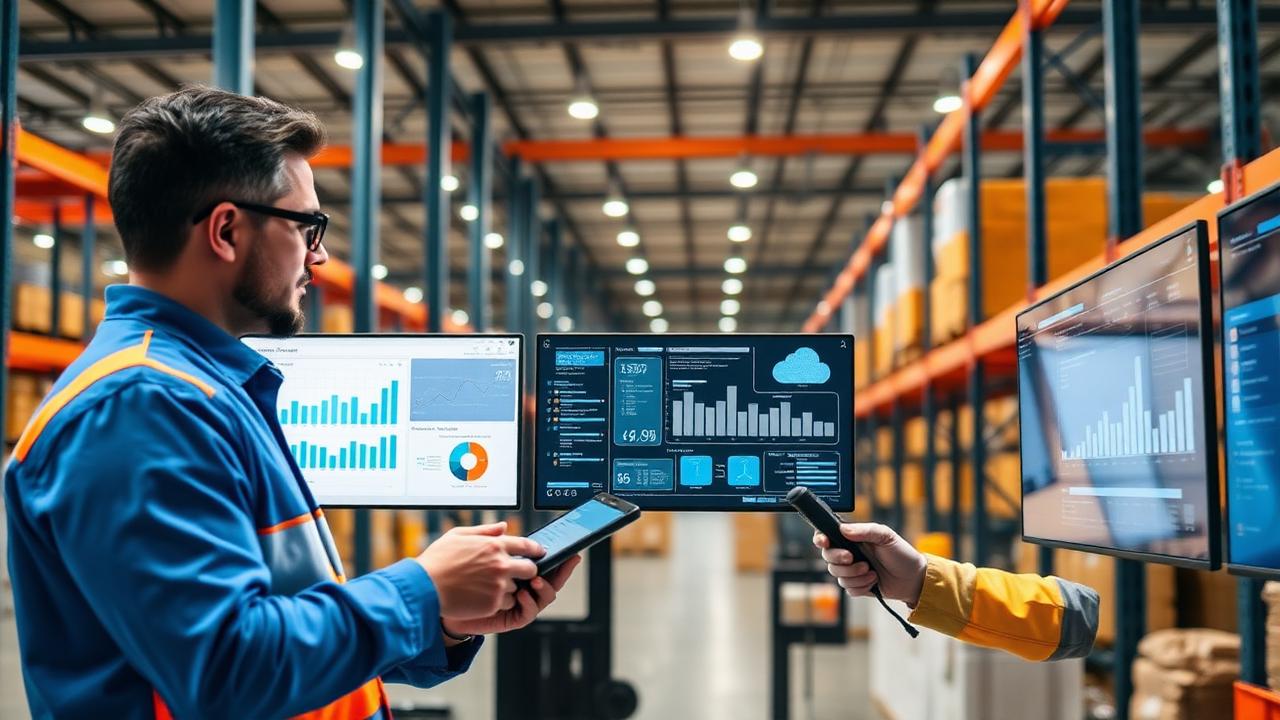
Logistics is undergoing a profound transformation. The pressure of e-commerce, rising customer expectations and the need for more efficient operations are forcing companies to rethink their processes. Logistics WMS argues that working smarter does not rely solely on technology, but on a balanced combination of people, information and systems that support decision-making.
Logistics made by people for people
Despite rapid digitalisation, logistics remains a deeply human activity. Modern consumers buy online with ease, but expect an experience as good as — or better than — what they would receive in a physical store. This means:
- Fast and reliable deliveries
- Zero errors
- Simple returns
- Efficient after-sales support
- Personalisation whenever possible
These expectations are not easy to meet. They require coordination, precision and adaptability. Above all, they require people who can interpret situations, solve problems and ensure that every stage of the operation runs smoothly.
Logistics WMS believes that technology should empower people, not replace them. Full automation is still far away and, even when it arrives, human supervision will remain essential. The real value lies in freeing teams from repetitive tasks so they can focus on what truly adds value.
The role of technology in smarter logistics
Technology has been transforming logistics on multiple fronts. Mobile robots, assisted picking systems, sensors, wearables and automated service platforms are just a few examples. However, Logistics WMS identifies two essential pillars where technology will have the greatest impact: management and execution.
Logistics management — planning with data and anticipation
Logistics management is the brain of the operation. It involves forecasting needs, organising resources, planning tasks and ensuring everything is aligned to meet deadlines and service levels. To achieve this, companies must:
- Know the real availability of stock
- Predict inbound flows, replenishment and demand peaks
- Plan teams and equipment
- Identify constraints before they occur
- Make fast, well-informed decisions
The challenge is that these decisions depend on hundreds of variables. When information is scattered or outdated, planning becomes reactive and inefficient. This is where technology makes a difference: intelligent systems can analyse data in seconds, identify patterns and propose optimised plans (forecast) that would be impossible to calculate manually.
Logistics execution — turning the plan into action with precision
Execution is the moment of truth. Even the best plan fails if it is not executed properly. To ensure operational consistency, each worker must know:
- What tasks they need to perform
- When they need to perform them
- What the priorities are
- Where each product is located
- How to validate each step
Smart execution eliminates paper, reduces unnecessary movement, decreases errors and increases productivity. Systems that guide operators step by step via radio frequency or voice-picking, validate actions and record data in real time allow performance to be measured and continuously improved.
Technology does not replace the operator — it guides, supports and enhances their efficiency.
How technology increases logistics efficiency
Logistics efficiency is not just about automating processes. It depends on structured information, fast decision-making and disciplined execution (lean logistics).
In recent years, companies like Amazon have demonstrated the potential of technology, but most organisations do not have access to the same resources. Still, there are universal principles that any company can adopt:
- Anticipate rather than react: the earlier the workload is known, the better resources can be allocated.
- Eliminate unnecessary manual tasks: every paper form, manual count or purposeless movement represents waste.
- Ensure full traceability: knowing where each product is reduces errors, returns and lost time.
- Measure to improve: without reliable KPIs, continuous improvement is impossible.
- Support teams with clear information: well-informed operators work faster and make fewer mistakes.
Technology is the means to achieve these goals — not the goal itself.
A vision for the future of logistics
Logistics WMS has developed a fully cloud-based warehouse management and execution system, simple to implement and powered by artificial intelligence. Its purpose is to help companies apply the principles described throughout this article: plan better, execute with precision and improve continuously.
The platform places planning at the heart of the operation, learning from real performance to predict capacity, anticipate needs and support decisions. At the same time, it guides operators on the ground, ensuring that every task is executed efficiently and with full traceability.
Logistics WMS believes that the future of logistics will be built on three pillars:
- Empowered people
- Intelligent processes
- Accessible, user-centred technology
Moving towards a smarter and more human logistics
Working smarter in logistics means combining human knowledge with technology that supports, guides and simplifies. It means planning with rigour, executing with precision and improving every day. Logistics WMS is committed to contributing to this future, helping companies become more efficient, more competitive and better prepared for the challenges ahead.