Incoterms in Logistics: The Complete Guide for Import and Export
If you are planning to expand your business across borders, you have already realized that international trade is much more than just selling and shipping. At the heart of the entire logistical machinery are Incoterms. But do you really know how to use them to protect your profit margins and avoid conflicts with your suppliers or customers?
In this guide, we will explain everything you need to know to become a master in managing international responsibilities.
What are incoterms and why should you care?
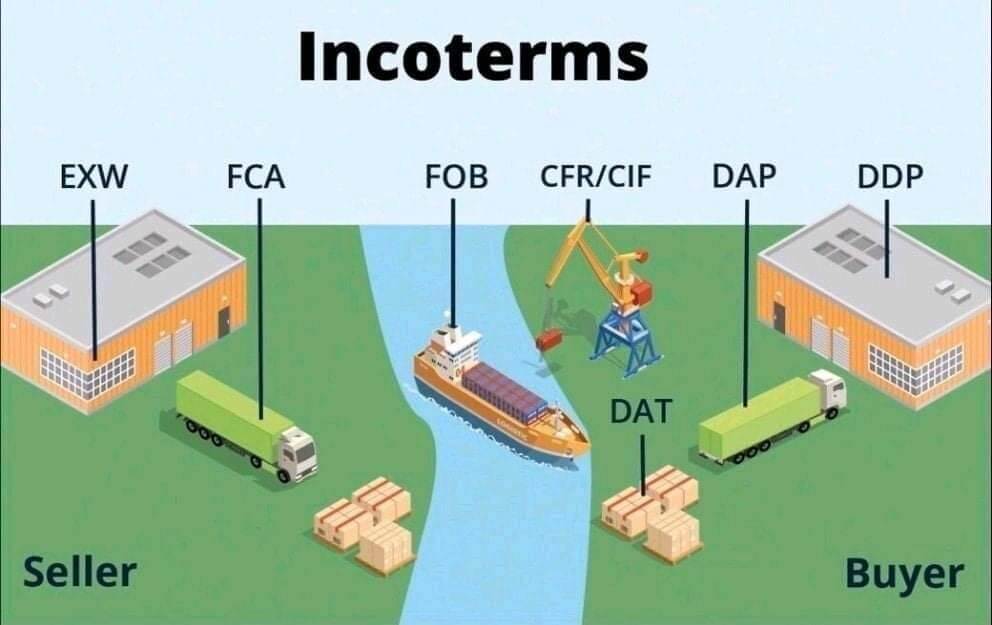
Incoterms (International Commercial Terms) are standardized rules set by the International Chamber of Commerce (ICC). They act as a universal three-letter contract that eliminates ambiguity in global transactions.incoterms (International Commercial Terms)
When you define an Incoterm, you are answering three vital questions for your operation:
Costs:
Who pays for shipping costs, insurance, and customs duties?
Obligations:
Who hires the transport and handles the documentation?
Risk:
At what specific geographical point does the responsibility for the cargo pass from the seller to you if the goods are damaged?
Which incoterm is best for your strategy?
There is no absolute "best" incoterm, but rather the one that best serves your interests at any given time. Let's analyze the options available to you:
1. When you want full control (or minimum risk)
EXW (Ex Works)
This is the term where the seller has the fewest obligations. They simply make the cargo available at their warehouse. You assume everything: from loading the truck to customs clearance at the destination. This is ideal if you have a trusted freight forwarder with unbeatable rates.
FCA (Free Carrier)
One of the most versatile terms. The seller delivers the goods to the carrier you designate. It is excellent for multimodal transport.
2. Classic Maritime Transport
If your cargo travels by ship, these are the terms you will encounter most frequently:
FOB (Free on Board)
The seller places the goods on board the vessel. From that moment on, the risk is yours. It is the gold standard for those who want to control sea freight costs.
CIF (Cost, Insurance & Freight)
Here, the seller pays the shipping costs and insurance to the destination port. It is convenient, but be careful: you often have no control over the quality of the insurance policy provided.
3. Delivery at destination: Maximizing convenience
DAP (Delivered At Place)
The seller brings the goods to your door. It is excellent for simplifying your logistics, but remember: unloading the truck or container remains your responsibility.
DDP (Delivered Duty Paid)
The opposite of EXW. The seller handles everything, including the payment of taxes (VAT/GST and customs duties) upon import. This is the "turnkey" option for those who want to avoid bureaucracy.
Comparative Table of Responsibilities
| Incoterm | Export Clearance | Main Transport | Cargo Insurance | Import Clearance |
|---|---|---|---|---|
| EXW | Buyer | Buyer | Buyer | Buyer |
| FOB | Seller | Buyer | Buyer | Buyer |
| CIF | Seller | Seller | Seller | Buyer |
| DDP | Seller | Seller | Seller | Seller |
Common mistakes you should avoid
A classic mistake many professionals make is using maritime terms for air or land cargo.
Sea Only:
FAS, FOB, CFR, CIF. These should only be used when goods are delivered from port to port.
Any Mode of Transport (Multimodal):
EXW, FCA, CPT, CIP, DAP, DPU, DDP. These are the ideal terms for containers traveling by truck + ship + truck.
Expert Tip:
If you are shipping a container, avoid FOB. Use FCA. In FOB, the risk only passes to the buyer once the cargo is on board. If the container falls while being hoisted at the pier, the dispute over responsibility can last for years. In FCA, the risk passes as soon as you deliver it to the terminal.
The hidden impact on Logistical Costs
When calculating your product price, you must include the "invisible costs" of each Incoterm:
THC (Terminal Handling Charges)
At the destination port, who pays for the movement of the cargo? If this is not clear in the Incoterm, you could be in for a surprise of several hundred dollars.
Demurrage and Detention
If the cargo is held at customs, who pays the container storage fines? In DAP, for example, this bill usually falls on you, the buyer.
How are incoterms updated?
It is vital to know that these rules are periodically updated by the ICC. Currently, we operate under the 2020 rules. If you are still using references to old terms like DAF or DDU, you may be creating legal problems for yourself.
One of the most significant changes was the replacement of DAT with DPU (Delivered at Place Unloaded). Why? Because the market realized that delivery did not necessarily have to be at a "Terminal," but rather at any location where the goods could be unloaded.
Checklist: 5 steps for a secure transaction
To ensure you don't fail in your next import or export, follow these steps:
Define the version: Always write "Incoterms 2020" in the contract.
Be ultra-specific: Don't just say "FCA London." Say "FCA Warehouse X, 123 Street Name, Postcode, City, Country."
Evaluate Insurance: In CIF and CIP, the seller is obliged to provide insurance. Check if the coverage (Institute Cargo Clauses) is sufficient for the actual value of your cargo.
Verify Taxes: If using DDP, confirm that the seller is fiscally registered in the destination country to pay import taxes and VAT.
Calculate the Total Landed Cost: Don't just look at the product price. Add shipping costs, insurance, fees, and customs clearance costs based on the chosen Incoterm.
Conclusion
Mastering incoterms in logistics allows you to negotiate better with your partners and avoid hidden costs that destroy your business's profitability. Whether you are buying raw materials from Asia or selling finished products to the US, choosing the right term is your best risk management tool.